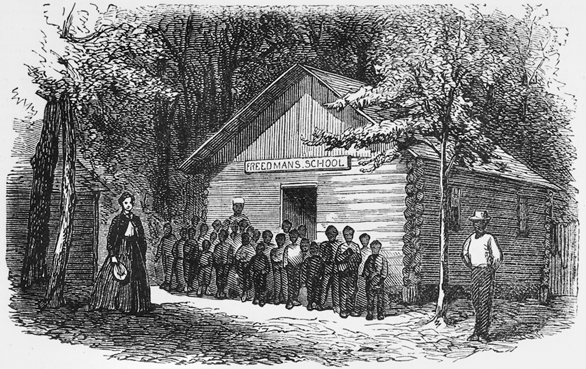
Since America’s conception, the treatment of non-white minorities in government, education, and society has been nowhere near equal or fair. African American slaves were almost never permitted to read or write, and once slavery became illegal in the United States, many freed people had few options of where they could go for education. For well over a century, schools for minorities – especially black Americans – have been segregated, underfunded, and of lower quality than their white counterparts. It wasn’t until the infamous Brown v. Board of Education ruling that declared the segregation of schools on the basis of race unconstitutional that schools began to desegregate. Even now, in the 21st century, more than one in three black students attend heavily segregated schools, especially in the south. For minorities, the impacts of racism didn’t end after the Civil Rights movement, and the consequences continue to influence their education.
Racism in American education
 Desegregating the arts